




- Published on: 2026-10-01 08:26:49
Scalp Trading Account Requirements: What to Check Before You Open One

An account labeled “Scalp” isn’t automatically the right fit for your strategy. The key is whether its verified terms match how you trade. That’s why scalp trading account requirements deserve a close look before you apply. Eligibility, identity checks, jurisdiction, spreads, commissions, margin, and execution can all affect your decision.
Application steps may be unclear, and account conditions can be difficult to compare. A name alone won’t tell you whether you qualify, what documents you’ll need, or whether the account is available where you live. TradingPRO offers a dedicated Scalp Account alongside Rookie, Micro, and Pro accounts. Confirm the current terms and regional availability before registering.
This guide explains what to check, from common application and verification requirements to the costs and execution conditions that matter for a scalping plan. You’ll also learn how to compare account terms with your trading needs before you apply.
Key Takeaways
- Separate account-opening eligibility from the trading conditions that determine whether an account suits your scalping approach.
- Check which identity and address documents are required, and confirm the age and residency rules for your jurisdiction.
- Assess scalp trading account requirements by comparing spreads, commissions, execution, margin, instruments, and platform conditions together.
- Write down your instruments, trading session, intended holding time, and risk limits before evaluating account terms.
- Consider TradingPRO’s Scalp Account only after verifying its current eligibility, costs, conditions, and availability where you live.
Scalp Trading Account Requirements: Separate Opening Eligibility from Trading Fit
A “scalping account” isn’t a universal account type with one industry-wide checklist. It’s a broker account to assess for short-duration trading: first, whether you can open it, and second, whether its conditions and functionality align with your approach to frequent, fast-moving positions. The distinction matters. Passing an application check doesn’t mean the account is a good trading fit.
The term scalp trading describes a short-term approach, but the label alone doesn’t establish what a broker permits or provides. Brokers set their own account terms, which may differ by the legal entity serving you and your jurisdiction. Check the current rules for your location rather than assuming another trader’s experience applies to you.
What does a scalping account requirement actually mean?
Scalp trading account requirements are the broker’s conditions for opening and using an account. Suitability depends on whether the verified terms and tools support your particular short-term strategy. Opening requirements may involve identity, residency, or other eligibility checks. Trading fit is a separate assessment. Review the costs, margin conditions, permitted instruments, order handling, and platform functionality relevant to your plan. Don’t treat a product name or account tier as proof of a specific feature.
That distinction helps you ask precise questions. Can you apply through the entity serving your country? What documents will it request? Do the current account terms support your intended trading activity? Check each answer against official, up-to-date account information before registering. Eligibility, available account options, and trading conditions can vary.
Who should assess a dedicated scalping account?
Start with your process, not the account label. A dedicated scalping account is worth assessing if you have a defined approach, know what you plan to trade and when, and have clear entry, exit, and risk limits. Short holding periods can demand fast decisions, while repeated trades can add up to significant costs and losses. Scalping carries risk, and no account label reduces it or guarantees performance.
New traders may benefit from building core knowledge before taking on a fast-paced style. If you’re still learning how currency markets, orders, and risk work, begin with forex trading fundamentals for beginners and practise developing a structured plan before comparing specialist account conditions. Then assess the terms against your actual process. TradingPRO offers a named Scalp Account, but you’ll still need to verify its current eligibility, terms, and availability in your jurisdiction.
Which Eligibility and Verification Requirements Should You Expect?
Before comparing account conditions, establish whether you can apply through the broker entity serving your location. Eligibility can depend on the broker’s current policies and your jurisdiction. Age and residency rules, available account options, and verification steps aren’t universal. Don’t rely on requirements listed for another country or entity.
What information and documents might an application request?
An application may ask for personal details and, as part of identity checks, could request identity evidence or proof of address. These are examples, not a guaranteed document list. The broker’s current verification process determines what applies, and approval depends on completing that process.
Use accurate, consistent information across your application and any documents you provide. Check that names and address details match, and confirm acceptable document types, formats, and any additional steps in the account instructions. For a TradingPRO application, check the current requirements directly before relying on a particular document list or process.
Why do jurisdiction and account entity matter?
A broker may serve clients through different legal entities, each with distinct eligibility rules or product availability. Identify the entity that would hold your account and read the terms for your region before applying. This helps you avoid mistaking a product description or requirement intended for another market for the conditions that apply to you.
Before applying, confirm eligibility, document requirements, and account availability on the current regional terms page for the entity that would serve you.
Some rules also depend on what you trade. For example, if your strategy involves U.S. securities in a margin account, don’t assume an older summary of day-trading rules reflects the current framework. FINRA’s risk-based intraday margin framework took effect on June 4, 2026, with member firms given until October 20, 2027, to complete implementation. The SEC’s SEC margin rules for day trading page can provide background, but check current broker disclosures for the rules and implementation that apply to your account. These details aren’t a universal requirement for every scalping strategy or instrument.
Use this verification step to narrow your options before assessing the broader scalp trading account requirements. If you’re ready to review the application process, you can check TradingPRO registration, while confirming current eligibility and regional availability before proceeding.
How to Compare Scalping Account Conditions That Affect Trading
Compare the account against your actual trading plan, not a headline spread or the word “Scalp.” With frequent entries and exits, small differences in costs or order handling may matter. Build a like-for-like comparison, and verify any TradingPRO-specific figure or feature against the current account terms before relying on it.
| Condition | What to check | Why it matters |
|---|---|---|
| Spread | How the bid-ask spread is presented and whether it can vary | The spread is one part of the cost of opening and closing a position. |
| Commission | Whether a commission applies, and how it is calculated | Include charges on both sides of a trade where applicable. |
| Order execution | Available order types, execution terms, and how orders may be handled | Execution outcomes and slippage can vary with market conditions and order handling. |
| Margin | Margin requirements, limits, and how changes are communicated | Margin can amplify losses as well as exposure. It isn’t simply extra trading capacity. |
| Instruments | Whether the instruments you intend to trade are available on the account | Terms and trading conditions can differ across instruments. |
| Platform | Supported platform, order-entry features, and relevant tools | Make sure its capabilities match the way you monitor and place trades. |
Which trading costs matter when positions are short-lived?
Assess the combined cost of a trade, not the spread in isolation. For example, one account might have a narrower spread but charge commission, while another has a wider spread with no separate commission. Which costs less depends on trade size, number of trades, and actual execution. This is a hypothetical comparison, not a quote or typical rate.
Include slippage in your assessment, since the executed price may differ from the one you expected. If you might hold a position beyond the intraday period, check whether financing or holding charges apply and how they’re calculated. If your plan closes positions sooner, focus on costs relevant to that holding period.
How do execution, margin, and instruments affect fit?
Check which order types the platform supports and read the broker’s execution terms. Confirm that the instruments you plan to trade are available under the account, then compare its margin conditions with your risk limits. A platform feature or margin allowance doesn’t remove market risk. For additional setup considerations, see the scalping execution and infrastructure guide.
Use these scalp trading account requirements as a comparison framework. Record each account’s current terms, then judge its full cost and functionality against your strategy. TradingPRO offers a Scalp Account, but you should verify its specific costs, margin, execution, instruments, and platform conditions in the latest applicable terms.
Use This Checklist to Decide Whether a Scalping Account Fits
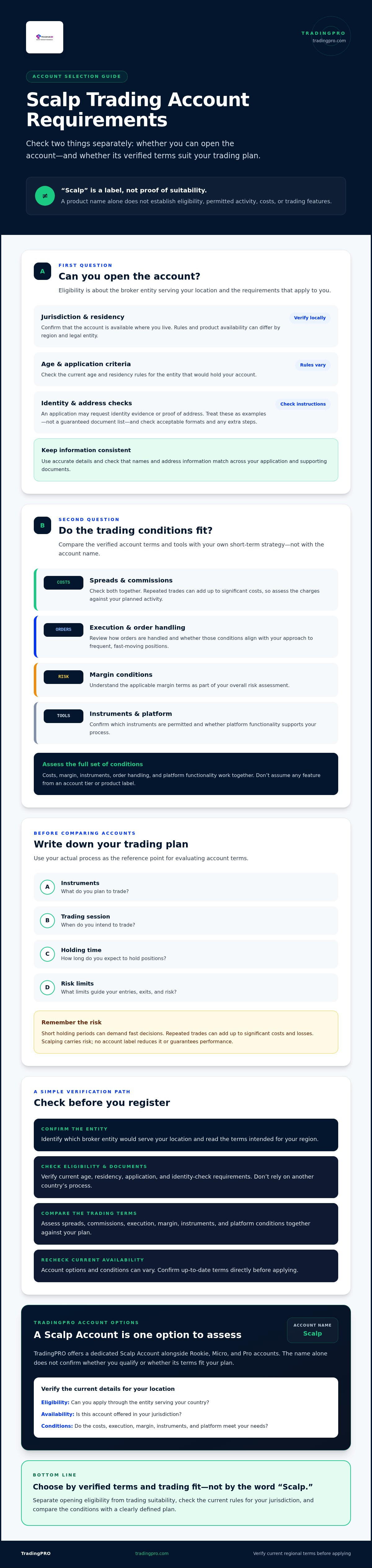
Turn your trading plan into a decision process before applying. The scalp trading account requirements that matter most are the ones you can verify and compare with your intended activity, not assumptions based on an account name. Work through these steps in order:
- Define the strategy. Record your intended instruments, trading session, typical position duration, entry and exit rules, and personal risk limits.
- Check eligibility. Confirm that you meet the current application and verification requirements for the broker entity serving your jurisdiction.
- Compare terms. Review applicable costs, available instruments, margin conditions, order handling, and platform capabilities against your written plan.
- Test your assumptions. Consider how the stated conditions could affect your approach, and ask the broker to clarify anything that’s unclear.
- Decide only when informed. If a key requirement or risk remains uncertain, pause and get an answer before opening or using the account.
Questions to answer before opening an account
Can you meet the verified eligibility requirements where you live? Do the current costs, available instruments, and trading conditions match your documented plan? Can you explain how a trade could lose money and set limits you’re prepared to follow? If you can’t answer confidently, take time to review the account terms and your risk plan before proceeding.
How can a trader test assumptions before committing?
Read the current account documents and platform information, not just a summary or headline claim. If a cost, margin condition, or order feature isn’t clear, ask the broker directly and keep the response with your notes. A practice or simulation option may help you assess platform mechanics, but use one only if the broker confirms it’s currently available and appropriate. It won’t establish that live execution or results will be the same.
For TradingPRO, review the Scalp Account details and confirm the current terms for your region. The Scalp Account is an option to assess, not a guarantee of fit or performance. Complete your comparison first, including any unanswered questions about eligibility, costs, instruments, margin, and execution. If the verified terms align with your requirements and you’re ready to proceed, start your TradingPRO registration.
TradingPRO Scalp Account: Verify the Current Terms, Then Take the Next Step
TradingPRO offers a dedicated Scalp Account within a wider account range that also includes Rookie, Micro, and Pro accounts. That makes it an option to investigate, not a guarantee that it will suit every scalping strategy. A name doesn’t establish eligibility, costs, available instruments, margin conditions, platform features, or execution terms. Check the current information for your region before deciding.
What to confirm on the TradingPRO Scalp Account page
Start with the TradingPRO Scalp Account information. Confirm which legal entity would serve you and whether the account is currently available in your jurisdiction. Then check the applicable eligibility criteria, application and verification steps, instruments, costs, margin conditions, and execution and platform details. If anything is unclear or missing, ask TradingPRO to clarify it before applying.
Terms can vary by entity or market, so don’t assume a detail shown in one region applies to yours. Check the official terms for your location before relying on any specific Scalp Account requirement or condition. Treat any figures or features as current only after confirming that they apply to your account and region.
When is it reasonable to proceed with registration?
If you’re unsure which tier’s verified conditions best match your plan, compare the Scalp Account with Rookie, Micro, and Pro. Use the same criteria for each option, including the instruments you intend to trade, relevant costs, platform needs, and account terms. Choose based on what you can confirm, not the tier name or an assumption that a dedicated account guarantees a better fit.
Proceed only when you understand the applicable terms, have confirmed that you’re eligible to apply, and have considered potential losses and your own risk limits. The scalp trading account requirements worth acting on are those verified for your situation. Registration doesn’t guarantee approval, trading performance, or particular account conditions.
Review the regional account details first. If they align with your needs, review the application and start registration.
Choose Your Account with Confidence
The strongest choice isn’t the account with the most appealing label. It’s the one whose verified eligibility, costs, instruments, margin conditions, and execution terms align with your trading plan. Keep the distinction clear: qualifying to open an account doesn’t automatically make it suitable for your strategy.
Use the scalp trading account requirements you’ve reviewed to compare current terms, confirm regional availability, and set risk limits before applying. TradingPRO offers a dedicated Scalp Account alongside Rookie, Micro, and Pro tiers, giving you several account options to assess. Verify each account’s applicable conditions rather than assuming a tier name tells the whole story.
If you’ve checked the current terms and are ready to review the application, review the application and take your next step. Make your decision with clarity, and keep your trading plan and risk limits firmly in view.
Frequently Asked Questions
What are the requirements for opening a scalping trading account?
Requirements vary by broker, account, and the entity serving your jurisdiction. The scalp trading account requirements may include meeting legal eligibility criteria, completing an application, and providing identity or address evidence if requested. Approval depends on the broker’s current verification process. Treat opening eligibility and trading suitability as separate checks: qualifying to apply doesn’t confirm that the account’s costs, instruments, or conditions fit your strategy.
Do I need a minimum deposit to open a scalping account?
There’s no single minimum deposit that applies to every scalping account. Each broker sets its own current funding terms, which may vary by account and region. Check TradingPRO’s applicable official terms for its current account-specific minimum deposit rather than relying on a figure from another market or account. Also distinguish an opening deposit from margin requirements for placing or holding positions.
Can beginners use a scalping trading account?
A beginner may be able to apply if they meet the broker’s eligibility requirements, but access doesn’t make scalping suitable for every experience level. Short-term trading can require quick decisions, a tested process, and firm risk limits. Before choosing this style, learn how orders, trading costs, and potential losses work. Build a clear plan first, and don’t treat an account label or platform access as a substitute for preparation.
What fees should I check on a scalping account?
Review the spread and any commission, then look for other charges relevant to your instruments and holding period. Financing or overnight holding charges may matter if positions remain open beyond the trading session. Slippage isn’t a fee, but it can affect the price you receive and your total trading result. Compare the full cost under the account’s current terms rather than judging it by a headline spread alone.
Is a scalping account different from a standard trading account?
Not necessarily in a universal, standardized way. “Scalping account” may be a broker’s account tier or label, so compare the actual terms and functionality instead of assuming the name guarantees particular features. Check costs, available instruments, margin conditions, order handling, and platform capabilities against your strategy. TradingPRO offers Rookie, Micro, Pro, and Scalp account tiers. Verify their current differences before choosing.
How do I know if a broker allows scalping?
Check the broker’s current account terms and trading policies for clear information about scalping and any restrictions that may affect your approach. Review rules related to holding periods, order types, instruments, and execution where applicable. If the wording is unclear, ask the broker to confirm whether your intended trading method is permitted on the specific account and through the entity serving your jurisdiction. Don’t rely on assumptions based on an account name.
Can I open a TradingPRO Scalp Account in my country?
Availability depends on your location and the TradingPRO entity that would serve your account. TradingPRO offers a dedicated Scalp Account, but availability may vary by country. Check the current regional account terms for availability, application requirements, and applicable conditions before registering. If the page doesn’t clearly address your location, contact TradingPRO for clarification rather than assuming the account is available to you.


