




- Published on: 2026-09-27 11:59:12
How to Attract Copiers to Your Trading Strategy

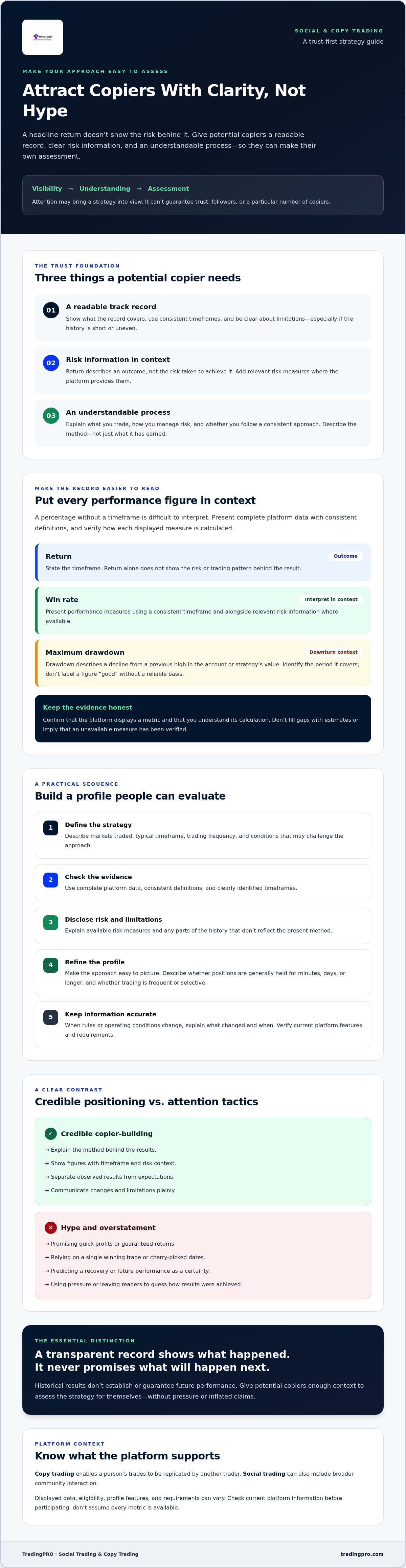
A headline return may catch someone’s eye, but it doesn’t show the risk behind it. If you’re learning how to attract copiers to your strategy, focus on what potential copiers can assess: a readable track record, clear risk information, and an understandable process. A short or uneven history doesn’t need dressing up. Explain what the record covers and where it has limitations so people can evaluate your approach for themselves.
Credible positioning isn’t about promising quick profits or applying pressure. It means explaining what you trade, how you manage risk, and whether you follow a consistent process. This guide covers how to describe your strategy, present performance measures such as win rate and maximum drawdown in context, and communicate changes without overselling results. A defined approach and steady, factual updates can help people assess your strategy, though they can’t guarantee an audience.
Key Takeaways
- Learn how to attract copiers to your strategy by making it easier to discover, understand, and assess, without implying that attention guarantees followers.
- Put performance figures in context with a consistent timeframe and relevant risk measures, so readers can interpret the record.
- Distinguish credible profile-building from tactics based on hype or exaggerated return claims.
- Use a practical sequence to define your strategy, check the evidence, disclose risk, refine your profile, and keep its information accurate.
- Explore TradingPRO’s Social Trading and Copy Trading ecosystem, and check current account eligibility and platform requirements before participating.
How to Attract Copiers to Your Strategy by Earning Trust First
Attracting copiers starts with making your strategy discoverable, understandable, and assessable. Visibility may bring attention, but it can’t guarantee trust or a particular number of copiers. Potential copiers need enough clear information to judge whether your approach, risk profile, and trading history fit their own needs.
Explain the method behind the results. Which markets do you trade? What timeframe do you typically use, and how frequently do you trade? Describe the conditions your approach is designed for, along with situations that may challenge it. Plain language helps people understand the method without suggesting it suits everyone.
Copy trading enables a person’s trades to be replicated by another trader, while social trading can also include broader community interaction. For a closer look at how these concepts differ, read this guide to social trading versus copy trading.
What potential copiers need to understand before following
Make your operating style easy to picture. For example, explain whether you generally hold positions for minutes, days, or longer, and whether you tend to trade frequently or selectively. State preferences as descriptions, not promises. Someone considering a strategy needs to know what it does, not just what it has earned.
Why trust matters more than a dramatic return claim
A single winning trade can’t show how a strategy behaves in different market conditions. A return figure is more useful when readers can see its timeframe, drawdown, and other available risk information. Consistency matters too: a record that reflects the stated approach is easier to assess than one that leaves people guessing about how the outcome was achieved.
A transparent strategy record shows what happened; it never promises what will happen next. Historical results don’t establish or guarantee future performance. Keep that distinction clear, especially when describing strong returns. The goal isn’t to make every visitor follow. It’s to give potential copiers the context to make their own assessment, without pressure or inflated claims.
Make Your Trading Strategy Easier to Evaluate With Clear Evidence
A strategy record is useful only if readers can understand what its figures cover. Present complete performance data made available by the platform, using consistent definitions and timeframes. Before naming a metric in your profile or updates, confirm that the platform displays it and that you understand how it’s calculated. Don’t fill gaps with estimates or suggest that an unavailable measure has been verified.
Return alone shows an outcome, not the risk taken to achieve it. A percentage without a timeframe is difficult to interpret. The same return can also reflect different trading patterns and levels of exposure. Add risk context where the platform provides it, and explain important limits on what the record represents.
Which performance and risk details deserve context
Drawdown describes a decline from a previous high in the account or strategy’s value. It shows how deep a downturn has been during the period presented, rather than focusing only on gains. Pair it with the timeframe and, where available, explain the strategy’s trade frequency and how results have varied. Avoid calling a figure “good” without a reliable basis. Give readers clear information to assess for themselves.
Keep definitions consistent. When comparing periods, identify the dates each figure covers and whether the same calculation applies. Check the platform’s current profile features before listing performance or risk metrics. Displayed data, eligibility, and profile requirements can vary, so verify what’s available rather than assuming every metric is shown.
How to describe a strategy without overstating its record
Separate observed results from expectations. “The strategy recorded a drawdown during this period” describes an outcome; “the strategy will recover” predicts one. Avoid cherry-picked dates, unsupported comparisons, and guaranteed-return claims. If the strategy’s rules or operating conditions changed, explain what changed and when so readers can distinguish earlier results from the current approach.
Disclose material limitations plainly. These might include conditions in which the strategy may struggle or parts of its history that don’t reflect the present method. Accurate context may make a record look less dramatic, but it makes the information more useful. That’s a stronger foundation for anyone learning how to attract copiers to your strategy.
If you’re exploring a social trading environment, review current eligibility and platform requirements before deciding whether to create a TradingPRO account.
Compare Attention-Grabbing Tactics With Credible Copier-Building
A bold claim can win a click, but it can’t show whether a strategy is understandable, consistent, or appropriate for someone’s goals. Build credibility by making your approach easy to investigate and reporting it consistently. Visibility may help people find a profile, but no profile feature or marketing tactic can guarantee copier acquisition.
| Approach | Builds credibility | Chases short-term attention |
|---|---|---|
| Communication | Explains the strategy’s markets, timeframe, limitations, and operating conditions in plain language. | Uses vague claims such as “best strategy” without explaining how it works. |
| Reporting | Provides consistent updates and keeps descriptions aligned with the available record. | Highlights isolated wins or selected dates while leaving out important context. |
| Visibility | Uses appropriate opportunities to make the profile easier to discover without overstating results. | Relies on hype, exaggerated return claims, or high-risk trades designed to attract attention. |
High-risk trades may produce striking short-term outcomes, but presenting them as proof of dependable performance can mislead potential copiers. A return claim without relevant context may create an impression the underlying record doesn’t support. Keep promotion factual. Don’t imply that past results predict future outcomes, and don’t treat visibility as a substitute for clear disclosures.
Credibility signals versus short-term attention
A clear strategy description gives readers a reason to investigate further. They can quickly see what the approach involves and what questions to ask. Substantive questions about the method, risk, or operating conditions can show that people are assessing the strategy. Views, likes, and follower counts may indicate attention, but they don’t prove strategy quality or copier confidence.
Measure progress by whether your information is accurate, consistent, and useful, not by chasing a particular audience number. Results vary, and no communication tactic guarantees that someone will choose to copy.
How to answer copier questions transparently
Prepare concise answers about the markets you trade, your typical timeframe, risk considerations, and strategy limitations. If you don’t know an answer or the platform doesn’t display a detail, say so rather than guessing. Keep public comments consistent with the available record and platform disclosures. Encourage potential copiers to review the current information and assess whether the strategy fits their own circumstances.
Follow a Practical Checklist to Improve Your Strategy Profile
A strong profile is clear, accurate, and easy to check against the platform’s information. Use this five-step review to improve your presentation without changing what your record shows.
- 1. Define the strategy. Summarize the markets you trade, typical timeframe, general approach, and conditions it’s designed for. Use plain language and explain important limitations.
- 2. Check the evidence. Confirm each performance statement against current, platform-provided information. Clarify timeframes and metric definitions, and remove anything you can’t verify.
- 3. Disclose risk. Include relevant risk details available on the platform and explain what they mean. Avoid language suggesting returns are certain or past results predict future outcomes.
- 4. Review the presentation. Check that the description is readable, accurate, and consistent with platform data. Fix jargon, unclear dates, and statements that could be mistaken for guarantees.
- 5. Monitor and update. Review the profile when your method or trading conditions change. Add context where needed, but don’t rewrite the historical record or obscure earlier results.
Prepare a clear and accurate strategy description
Describe the process, not just the outcome. For example, say whether you generally trade short-term or longer-term and what market conditions your approach is intended to address. Don’t imply that it suits every copier. Before publishing, check each claim against the latest platform information and confirm that stated limitations remain relevant.
Accuracy matters as much as readability. If the platform’s available metrics or display rules change, update your wording to match what readers can review. Don’t assume a particular statistic or profile feature is available. Verify current platform details first.
Review visibility and communication responsibly
Confirm the platform’s current rules for publishing a profile and how strategies may be discovered. Requirements can vary, so don’t rely on assumptions or unverified ranking advice. Answer questions with factual, plain-language information about the approach and its limits. Never pressure someone to copy.
Use feedback to identify confusing explanations, then clarify them without altering past performance figures. A disciplined profile review is a practical step in how to attract copiers to your strategy, though it can’t guarantee copier growth. To explore TradingPRO’s Social Trading and Copy Trading environment, create a TradingPRO account and check current eligibility and platform requirements before participating.
Explore TradingPRO’s Social Trading Ecosystem as a Next Step
Once your strategy information is clear and ready for review, a social trading environment may be a place to explore how sharing and copy trading work. TradingPRO offers Social Trading and Copy Trading, alongside four listed account options: Rookie, Micro, Pro, and Scalp. These account options aren’t a promise that any tier supports publishing a strategy, improves visibility, or attracts copiers.
Check platform fit before sharing a strategy
Before registering or preparing to publish, confirm that your account and region are eligible for the activity you have in mind. Check current rules for strategy sharing and discovery, including any profile publication requirements or visibility settings. Don’t assume a listed account option automatically includes a particular strategy feature.
Read the platform’s current terms and risk disclosures, and confirm which entity applies to you. Make sure you understand what information potential copiers can see and how performance details are presented. These checks help you decide whether the platform’s features match your needs, without relying on assumptions or promotional claims.
Take the next step with clear expectations
Use the evaluation framework in this guide to review the available information. Is the strategy description clear? Can you verify the displayed record? Are relevant risks and limitations explained? If any answer is unclear, check current platform guidance before sharing a strategy or deciding to copy one.
Learning how to attract copiers to your strategy starts with credible communication, but no platform or account choice can guarantee copier growth or trading results. Copy trading involves risk, and account terms, eligibility, and features may depend on your circumstances and region. Review those details carefully before taking action.
TradingPRO’s Social Trading and Copy Trading ecosystem is one option to explore. Check the current requirements and disclosures before deciding whether to proceed.
Build a Strategy People Can Assess With Confidence
Learning how to attract copiers to your strategy starts with a profile that explains your approach and presents its record in clear context. Share performance and risk information consistently, describe relevant limitations, and keep claims grounded in verifiable platform data. Clear communication can help people assess your strategy, but it can’t guarantee copier growth or future results.
TradingPRO offers Social Trading and Copy Trading, with Rookie, Micro, Pro, and Scalp listed as account options. Before participating, check current eligibility, strategy-sharing features, regional terms, and risk disclosures. An account option alone doesn’t confirm that you can publish a strategy or attract copiers.
Ready to explore the platform? Explore TradingPRO registration, review the current requirements, and decide whether the available features fit your goals. Keep building with clarity and consistency. Trust starts with information people can assess for themselves.
Frequently Asked Questions
How do I attract copiers to my trading strategy?
Make your strategy easy to find, understand, and assess. Explain the markets you trade, your typical timeframe and approach, and relevant risks or limitations. Present performance information consistently and in context, using only metrics the platform provides. Answer questions factually and keep your profile aligned with the current record. These steps can support credibility, but no presentation or promotion method can guarantee that people will copy your strategy.
What makes copiers trust a trading strategy?
Copiers can make a more informed assessment when the strategy description, performance record, and risk information are clear and consistent. Explain how the approach works in plain language, give results a timeframe, and disclose relevant drawdowns and limitations when those details are available. Communicate honestly when conditions or methods change. A strong return claim alone can’t establish that a strategy is reliable or suitable for another person.
How long should a trading strategy perform before attracting copiers?
There’s no universal track-record length that guarantees copier interest or proves a strategy’s quality. A short history may give readers limited evidence, while a longer record still needs context about market conditions, drawdowns, and changes to the method. Present the available history accurately instead of suggesting it proves future performance. Check the platform’s current eligibility and profile requirements, since rules for sharing a strategy may vary.
Can I attract copiers without high returns?
Yes. Potential copiers may value a clear, consistent approach and transparent risk information, not just headline returns. Explain what your record covers, how the strategy operates, and what its limitations are. Avoid taking on extra risk just to make performance look more dramatic. No particular return level guarantees copier interest, and people should be able to assess the strategy using available information rather than promotional claims.
Should I share my full trading strategy to attract copiers?
You don’t necessarily need to publish every entry rule or proprietary detail, but provide enough information for people to understand the strategy’s markets, timeframe, general method, risk, and limitations. Don’t conceal material information that could affect someone’s assessment. Review the platform’s current rules for strategy descriptions and disclosures before sharing. If you can’t explain an element clearly, say what you can verify and avoid unsupported claims about results.
Do past trading results guarantee future copier growth or profits?
No. Historical results show what happened during a particular period; they don’t establish or guarantee future performance, profits, or copier growth. Market conditions can change, and results may differ from the past. Share performance figures with their timeframe and relevant risk context, and don’t present selected wins as proof of likely future outcomes. Potential copiers should assess the available information and consider whether the strategy fits their own circumstances.
How can I promote a copy-trading strategy without misleading people?
Keep promotion factual and consistent with the platform’s available record and disclosures. Describe the approach, timeframe, risks, and limitations without promising returns or implying that past results will continue. Avoid cherry-picked dates, exaggerated comparisons, and pressure to copy. Verify current platform rules before sharing a profile or discussing its visibility. Useful communication helps people investigate further; it doesn’t replace their own assessment or guarantee they’ll choose to follow.


