




- Published on: 2026-10-03 04:31:00
Forex Broker Deposit Methods: How to Choose and Fund Your Account in 2026

The fastest payment isn’t always the best choice. The right forex broker deposit methods depend on what’s available in your country, how clearly you can see the costs, and whether the same route works for withdrawals. A quick deposit can still involve conversion charges, processing delays, or terms that don’t suit your plans.
To compare options, look at the whole payment journey: the amount you send, the currency that reaches your account, any provider charges, and how withdrawals work. Banks, cards, e-wallets, and local payment services can differ on each point. Deposit and withdrawal rules may also differ, so review both before sending money.
This guide compares common methods using practical criteria, so you can make an informed choice for your location and needs. You’ll learn what to review before funding, how to identify potential costs, and why a payment route that suits your account matters beyond speed alone. Treat funding as one part of a deliberate trading setup, whether you’re exploring the Rookie Account or comparing account options.
Key Takeaways
- Forex broker deposit methods differ in local availability, convenience, potential charges, currency conversion, and withdrawal compatibility.
- Before confirming a deposit, review the displayed currency, fees, limits, and estimated processing details.
- Compare bank transfers, payment cards, and electronic payment services using more than speed alone.
- Check whether deposit and withdrawal rules differ, and keep a record of your transaction.
- Choose an account and funding approach that fit your plans, and only deposit money you can afford to risk.
What Are Forex Broker Deposit Methods, and How Do They Differ?
Forex broker deposit methods are payment channels used to add funds to a brokerage account. They move money from a personal payment source into a trading account, where it can be used for trading activity. The methods available can vary by country, account currency, and broker terms. Don’t assume that a payment option used by another trader will be available for your account.
A deposit is a funding step, not a trade or a promise of returns. It doesn’t guarantee that a trade will be placed, succeed, or generate profit. Nor is adding money to a brokerage account the same as buying an asset or depositing funds into a cryptocurrency wallet. Keep those purposes distinct, and understand the trading risks before funding an account.
Which payment method categories do forex traders commonly encounter?
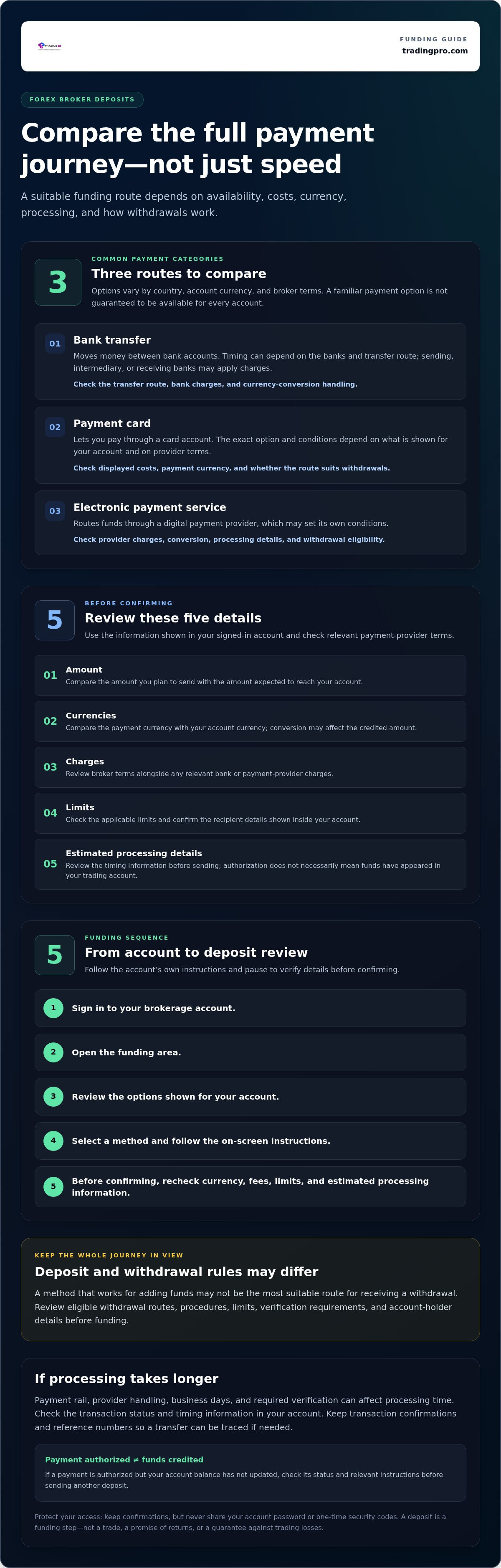
Payment options generally fall into three categories. Bank transfers move money between bank accounts; SEPA and SWIFT are examples of payment-system networks used for transfers, not proof that a particular broker accepts them. Payment cards let users pay through a card account. Electronic payment services route funds through digital payment providers. Each uses a different payment path and may have conditions set by the provider.
These are broad categories, not a list of guaranteed options for every account. An Electronic funds transfer (EFT) describes the electronic movement of money between accounts, which underlies many non-cash payment processes. Review the funding options and terms shown for your account rather than assuming a familiar payment brand or network is supported.
Are broker deposits and withdrawals handled the same way?
Not necessarily. A broker may apply different procedures, limits, or eligible routes to withdrawals than to deposits. Payment providers can also set their own conditions. A method that works for adding funds may not be the most suitable route for receiving a withdrawal.
Identity checks may be part of the process, and account terms may require payment details to match the account holder’s information. Before funding, review the rules for both deposits and withdrawals, including verification requirements and any stated limits. This helps you understand how money moves in and out of your trading account before you choose a payment route.
How Does a Forex Broker Deposit Work From Payment to Account?
Funding follows a simple sequence, but each step deserves a careful check. Sign in to your brokerage account, open the funding area, review the options shown for your account, select a method, and follow the on-screen instructions. Before confirming, compare the payment currency with the account currency, and review any displayed fees, limits, and estimated processing information.
The payment provider’s terms matter too. A bank or payment service may apply transaction conditions or a currency-conversion rate separate from any terms shown by the broker. Compare the amount you plan to send with the amount expected to reach your account. If the payment currency differs from your account currency, conversion may affect the credited amount.
What should you check before confirming a deposit?
Pause at the confirmation screen. Verify the recipient details shown inside your signed-in account, then compare the payment and account currencies. Review the broker’s displayed terms alongside any relevant bank or payment-provider conditions. Check the amount, applicable limits, and estimated timing. If a detail is unclear, don’t guess or rely on instructions from an unsolicited message.
Protect your access. Keep transaction confirmations and reference numbers, but never share your account password or one-time security codes. For U.S. context, FINRA guidance on retail forex broker-dealers describes obligations that apply to FINRA member firms conducting retail forex business. It’s a reminder to treat account and payment instructions with care, not a guarantee against trading losses.
What can affect deposit processing time?
The payment rail, provider handling, business days, and any required verification can all affect how long a deposit takes. A payment authorization confirms that a transaction was approved or initiated. It doesn’t necessarily mean the funds have appeared in your trading account.
Use the transaction status and timing information displayed in your account, and keep the provider’s confirmation in case you need to trace a transfer. If the payment is authorized but your account balance hasn’t updated, check the status and relevant instructions before sending another deposit. You can review the TradingPRO account registration process as part of preparing before funding.
How Should You Compare Forex Broker Deposit Methods?
Compare each option across the full payment journey, not just the time it takes to authorize a deposit. Bank transfers, payment cards, and electronic payment services can differ in provider charges, currency conversion, transaction control, and withdrawal compatibility. The common ways to fund a forex account include these broad categories, but the right fit depends on your location and circumstances.
| Method | Control and convenience | Charges and conversion | Withdrawal compatibility |
|---|---|---|---|
| Bank transfer | Direct movement between bank accounts can feel familiar and provide clear bank records. Timing may depend on the banks and transfer route. | Sending, intermediary, or receiving banks may apply charges. Check how currency conversion is handled. | Review whether withdrawals can return through the same route and what details are required. |
| Payment card | Using a card can be convenient, and authorization may be quick. Approval and account-credit timing can differ. | Check both broker terms and card-provider conditions, including possible foreign-currency conversion. | Card deposits and withdrawals may follow different rules. Confirm the available withdrawal process. |
| Electronic payment service | A digital service can offer a straightforward online flow, subject to its own account and verification steps. | Provider charges, limits, and exchange rates may apply in addition to any broker terms. | Check whether the service can be used for withdrawals and whether the account details must match. |
Use the table as a comparison framework, not a promise of availability or terms. Forex broker deposit methods can vary by country, account currency, and broker conditions. Review the options and current terms displayed for your account before deciding.
When might a bank transfer suit a trader?
A bank transfer may suit someone who prefers moving funds directly from a bank account and keeping the transaction in familiar bank records. It isn’t automatically cheaper or faster. Transfer timing, intermediary charges, and currency handling can vary by route and institution. Compare the full cost and estimated timing shown for your transaction before choosing it.
When might a payment card or electronic service suit a trader?
Cards and electronic services may appeal to traders who value an online payment flow or quick authorization. Those advantages don’t guarantee faster account credit or easier withdrawals. Check provider limits, conversion terms, and withdrawal compatibility alongside the broker’s displayed conditions. Compare the full deposit-and-withdrawal journey, not speed alone.
Forex Deposit Myths: Is the Fastest Method Always the Best?
Myth: the fastest deposit method is automatically the best. Speed is only one part of the decision. A payment may be authorized quickly while the funds still need to appear in the trading account. The overall process can also depend on account verification, provider handling, and the terms attached to the payment route.
Compare forex broker deposit methods by their full trade-offs. A convenient option may involve conversion conditions or provider limits that matter more than quick approval. A successful deposit also doesn’t prove that trading is safe, suitable for your financial situation, or likely to produce a return. Payment convenience and trading risk are separate considerations.
Does a faster deposit mean faster access to every trading feature?
No. Payment authorization means a transaction has been approved or initiated. Account verification and other review requirements may still affect when funds appear or what account features are available. Check the current status and instructions in your account rather than assuming a particular method will provide instant access. Fast payment approval is one step, not a universal processing promise.
Are low-fee deposits always the lowest-cost option?
Not necessarily. A low or zero visible fee may not reflect currency conversion, intermediary charges, or conditions set by the payment provider. Compare the amount you send with the amount credited, and review both the broker’s displayed terms and the provider’s terms. The credited amount gives you a clearer cost picture than one fee line alone.
Use a balanced check before choosing:
- Speed: distinguish authorization from funds appearing in the account.
- Total cost: account for conversion and any provider or intermediary charges.
- Conditions: review limits, verification steps, and withdrawal compatibility.
- Risk: remember that funding an account doesn’t reduce the possibility of trading losses.
A deposit method can make funding more convenient, but no payment route removes financial risk or establishes that an account suits your goals. Make the funding decision deliberately, then understand the account and trading risks before placing trades. You can take the next setup step through TradingPRO account registration.
How to Choose a Deposit Method and Start Your TradingPRO Journey
Turn your comparison into a clear plan before moving any money. Your choice of forex broker deposit methods should fit your location, account currency, and payment preferences, while taking costs and withdrawal conditions into account. A few checks now can help you start with realistic expectations.
What should a first-time trader prepare before funding?
Get your account access ready, along with any identity information requested during account setup. Decide in advance how much you can afford to risk, and set a personal limit that won’t disrupt essential expenses. Trading involves risk, and a deposit doesn’t guarantee a trade or a return.
Before sending funds, read the relevant account and payment terms. Pay particular attention to currency conversion, transaction conditions, and withdrawal rules. Then use this checklist:
- Confirm local availability: Review the payment options shown for your location and account.
- Compare terms: Check broker information alongside any conditions from your bank or payment provider.
- Check currency: Compare the payment currency with the account currency and understand any conversion that may apply.
- Save the record: Keep the transaction confirmation and reference details for your own records.
Don’t fund an account simply because a payment option appears convenient. Make sure the method’s terms and your own risk limit are clear before confirming.
What is a sensible next step after comparing methods?
Review the account that fits your experience and approach before funding. TradingPRO’s primary account focus is the Rookie Account, a place for new traders to explore as they build a deliberate forex setup. Read the account details and consider them alongside your learning goals, risk plan, and understanding of how trading works.
Funding is one part of the process, not a substitute for preparation. Take time to understand your account, the applicable payment and withdrawal terms, and the possibility of losing money through trading. When you’re ready to take the next step, create your TradingPRO account.
Make Your Next Funding Step With Confidence
The best forex broker deposit methods are the ones that fit your location and give you a clear view of costs, currency conversion, processing expectations, and withdrawal conditions. Compare the full payment journey rather than choosing on speed alone, and keep a record of the transaction. Most importantly, only fund an account with money you can afford to risk. Trading involves financial risk, and a deposit doesn’t guarantee a return.
Make account choice part of the same deliberate setup. TradingPRO offers Rookie, Micro, Pro, and Scalp account tiers, with the Rookie Account as its primary focus. Review the account details and consider how they fit your experience and trading goals before funding.
Ready to take a considered next step? Create your TradingPRO account, then move forward at a pace that matches your plan. A clear start supports informed decisions.
Frequently Asked Questions
What deposit methods do forex brokers usually offer?
Forex brokers may offer bank transfers, payment cards, or electronic payment services. These forex broker deposit methods are broad categories, not confirmation that a particular broker accepts every option. Available choices can depend on the broker, your account, and your country. Review the funding options shown in your account, along with supported currencies, payment-provider conditions, and withdrawal rules, before choosing a method or sending funds.
How long does a forex broker deposit take?
Deposit timing depends on the payment method, provider processing, business days, account checks, and the broker’s procedures. An approved or authorized payment doesn’t necessarily mean the money is immediately available for trading. Check the estimated timing and transaction status displayed during funding, and keep the confirmation for your records. Avoid relying on general online timelines to plan a deposit, since actual processing can vary by transaction and location.
Are forex broker deposit methods free?
Not necessarily. A broker’s displayed terms may differ from charges or currency-conversion conditions applied by a bank or payment provider. Before confirming, compare the amount you send, the account currency, and the amount credited. A method with no visible broker charge may still involve other costs. Conditions can vary by country, provider, and transaction, so review the relevant terms rather than assuming a deposit is cost-free.
Can I withdraw using a different method from the one I used to deposit?
Possibly, but withdrawal rules vary by broker, payment provider, and jurisdiction. Some processes may require a particular route or additional checks, so don’t assume the deposit and withdrawal options are identical. Read the withdrawal terms before funding, especially if you expect to use more than one payment method. A successful deposit doesn’t guarantee that a specific withdrawal route will be available for your account.
Is it safe to deposit money with a forex broker online?
Protect your account by signing in through the broker’s secure funding process, checking recipient details, and keeping your password and one-time security codes private. Review the applicable account terms before transferring money. Payment security and trading risk are separate: a secure transfer can’t prevent market losses or make trading suitable for you. Consider your financial circumstances and risk limits, and fund only with money you can afford to lose.
What should I check before making my first forex deposit?
Confirm that the method is available for your location and account, then review the payment currency, possible charges, estimated processing information, and withdrawal conditions. Follow the funding instructions inside your signed-in account and verify the recipient details before confirming. Keep the transaction record and protect your login credentials. Decide your personal risk limit in advance, and never treat a deposit as a promise of profit or a reason to trade beyond your plan.


